


 By Simran - July 21, 2026
_21-03-2026_10-03.jpg)
Water is one of the most precious resources on Earth, yet in some parts of the world it is exceptionally scarce. The driest countries, measured by average annual rainfall, are concentrated across North Africa and the Middle East, where vast deserts dominate the landscape and populations rely heavily on rivers, groundwater, and desalination to survive. Here are some of the driest nations on the planet.
Egypt
Often cited as the driest country in the world by average annual rainfall, Egypt receives only around 18 millimetres of precipitation per year. The vast majority of the country is covered by the Sahara Desert, and life is concentrated almost entirely along the Nile River and its delta, which provide the water that sustains the population.
Libya
Dominated by the Sahara, Libya is one of the most arid nations on Earth, with average annual rainfall of roughly 56 millimetres. More than 90% of the country is desert, and it is home to some of the hottest recorded temperatures in history.
Saudi Arabia
The largest country in the Middle East is almost entirely desert, including the vast Rub' al Khali, or Empty Quarter, one of the largest continuous sand deserts in the world. With average annual rainfall of around 59 millimetres, Saudi Arabia relies heavily on desalination for its water supply.
United Arab Emirates
The UAE is among the world's most arid nations, receiving only around 78 millimetres of rain per year on average. With scarce natural freshwater, the country is one of the largest producers of desalinated water globally and has invested heavily in cloud-seeding technology to boost rainfall.
Yemen
Located on the southern tip of the Arabian Peninsula, Yemen is an extremely dry country facing severe water scarcity, with average annual rainfall of about 167 millimetres concentrated in limited regions. Chronic water shortages remain one of its most pressing challenges.
Oman
Much of Oman is desert, and the country receives around 125 millimetres of rainfall per year on average. Its water supply depends heavily on groundwater and desalination, though its southern Dhofar region benefits from a seasonal monsoon known as the khareef.
Qatar
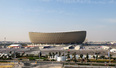
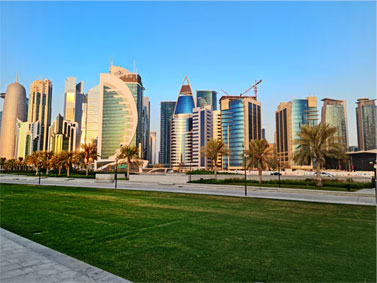
A small, low-lying peninsula, Qatar is one of the driest and most water-scarce countries in the world, receiving only around 74 millimetres of rain annually. It has almost no natural freshwater and relies overwhelmingly on desalination.
Bahrain
This small island nation in the Gulf receives roughly 83 millimetres of rainfall per year on average and has minimal natural freshwater resources, making it heavily dependent on desalination to meet its needs.
Kuwait
With average annual rainfall of around 121 millimetres and virtually no permanent rivers or lakes, Kuwait is one of the most water-scarce countries on Earth and depends almost entirely on desalinated seawater.
Jordan
One of the most water-poor countries in the world, Jordan receives limited rainfall, averaging around 111 millimetres per year, with much of its territory classified as arid or semi-arid desert. Water scarcity is a defining national challenge, intensified by a growing population.
Living With Extreme Aridity
The nations that top the list of driest countries share a common reality: with so little natural rainfall, they must find alternative ways to secure water for their people, agriculture, and industry. Across the Gulf and North Africa, this has driven massive investment in desalination plants, groundwater management, water recycling, and, in some cases, cloud-seeding programmes. As global temperatures rise and populations grow, water security is becoming an increasingly critical issue for these countries and a growing concern worldwide.
Note: Rainfall figures are long-term averages and can vary between sources and from year to year. Rankings of the "driest" countries may differ depending on whether they are measured by average annual precipitation, aridity, or water availability per capita.
_24-51-2026_12-51.jpg)
_10-15-2026_12-15.jpg)


_20-08-2026_05-08.jpg)
_27-51-2026_11-51.png)
_27-43-2026_12-43.png)


.jpg)
.jpg)

.jpg)


.jpg)
.png)
.jpg)








Leave a comment